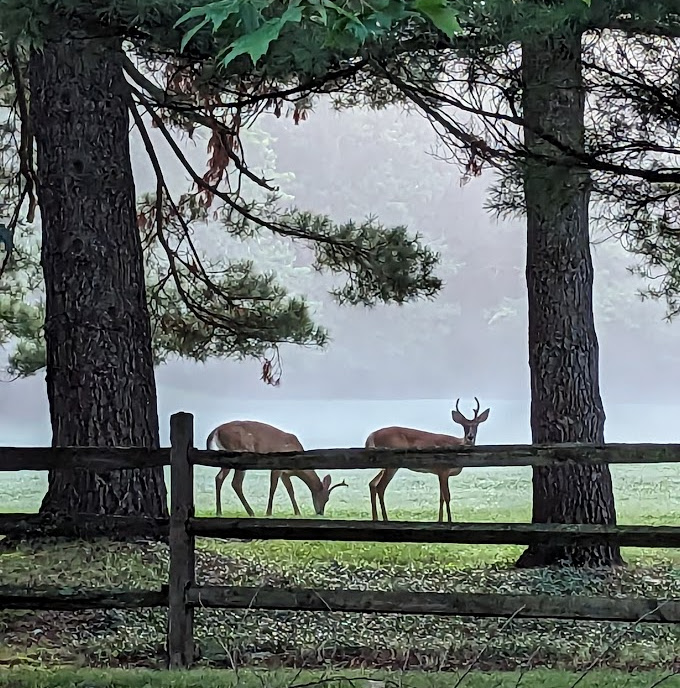
Let your arms down
There was a farmer who had a lot of fields, and he kept all the birds and creatures away from his crops with traps and fences. He was very successful.
But he was also very lonely.
So, one day, he stood in the middle of his fields to welcome the animals. He stayed there from dawn until dusk, with his arms outstretched, calling to them. But, not a single animal came.
Not a single creature appeared.
They were terrified, you see, of the farmer’s new Scarecrow.
Whenever I read this story, I stop. And let it percolate before I go on. Because I know what it is like to be that “scarecrow”. And while there’s a part of me that sees this as “detrimental” (something I need to change), I don’t want to run from that Terry. The scarecrow in me needs love too.
The Doctor is a movie about surgeon Jack McKee (William Hurt); the story of an aloof, self-centered heart surgeon who treats his patients like numbers on a list. Then he gets sick himself—cancer—and is not prepared for the paradigm shift. And his sickness (and vulnerability) gives him the opportunity to change his life. The story of the farmer is from the movie, and is about that paradigm shift.
Well, I admit it. I do like my fields orderly. I like my world tidy. Free from commotion and disruption and creatures. Life feels understandable or manageable that way. And there is an artifice of control.
See (I somehow assure myself), my world is in place.
My script is in place.
This yearning for control (or grasp) has a special import in today’s binary world, where we live by the paradigm that the other (you know, anyone we call them) is considered an enemy, and to be feared. So, our approach to each encounter ends up skeptical at best, and adversarial at worst. And it makes sense. Now feeling less control than ever.
Here’s the deal: Like the farmer, we feel threatened by uncertainty. Although, that’s not quite the right word; more like feeling undefended or vulnerable.
Think of this as an invitation: if I do expand my world, open my fields, invite “them” (or any other) into this world, I (and my heart) am exposed to touch.
To connection. To kindness.
To tenderness. To empathy.
To wounds. To love. To untidiness. To healing
To generosity. To loss. To bounty.
To the unknown.
But what if these creatures—whatever or whoever they represent—may not handle me or my world with care? My confession is that deep down, maybe I don’t really want intimacy. Maybe I just want security.
The 1988 film Gorillas in the Mist tells the story of Dian Fossey, courageous field biologist, as she managed to befriend a tribe of gorillas. Dian had gone to Africa in footsteps of mentor, George Schaller, a renowned primate biologist who had returned from the wilds with more intimate and compelling information about gorilla life than any scientist before.
When his colleagues asked how he could learn such remarkable detail about the tribal structure, family life, and habits of gorillas, he attributed it to one simple thing: he never carried a gun.
You see, all previous generations of explorers and scientists entered that territory with one assumption: the gorillas were dangerous. So, the scientists came with an aggressive spirit, large rifles in hand.
The gorillas could sense the danger, and kept distance. What a surprise.
And yes, I do enter many (okay, most) of my relationships well-armed. (Just in case.) And I wonder why guardedness takes root in my spirit.
I like that Fossey always moved slowly, gently, and above all, respectfully toward these creatures. Sometimes sitting still, hour after hour.
“Anything will give up its secrets if you love it enough,” George Washington Carver reminded us.
It’s as if we want them both. You know, I want my field free of creatures (who knows what they will do). And I want the creatures to be my friend (but why are they so suspicious of me?). It’s a tug of war between the unknown (the mystery) and the need to be held very tight and told, “I see you. You are okay now.”
In The Doctor, McKee is telling his friend June—fellow cancer patient—about his difficulty connecting with his wife; living a life full of misunderstanding, apprehension and wariness. And how it constricts his heart.
How he no longer wants “an empty field.” He wants company.
“I’ve kept her out here for years,” he says with his hand and arm raised and outstretched. “And I don’t want that anymore. But I don’t know how to get my arm down.”
June writes a letter to Jack (delivered after her death), with the story of the scarecrow. And closes with this invitation: just let down your arms, and we’ll all come to you.
What is it we think we are keeping out?
We easily forget that self-compassion is a healing balm.
Speaking of uncertainty and parts of our world (life) out of control, there are so many now affected by the two recent hurricanes, and it is easy to see how parts of us can be shell-shocked (yes, frozen), not sure how to navigate. And while we may not be able to solve all the problems or heal all the wounds, let us begin here: we can hold space for both gratitude and concern in our heart, trusting that this balancing act is a part of the human experience. Knowing that grace is real in a world where we can be absolutely disheartened and absolutely grateful at the same time.
“You become freer to be yourself,” Poet Kim Rosen writes, “not because you finally found a place where you are protected from feeling what you don’t want to feel, but because you welcomed those unwanted feelings and lived to tell the tale. Maybe your idealized image of yourself didn’t survive, but you did.”
Tell me again…
“Just let your arms down.”
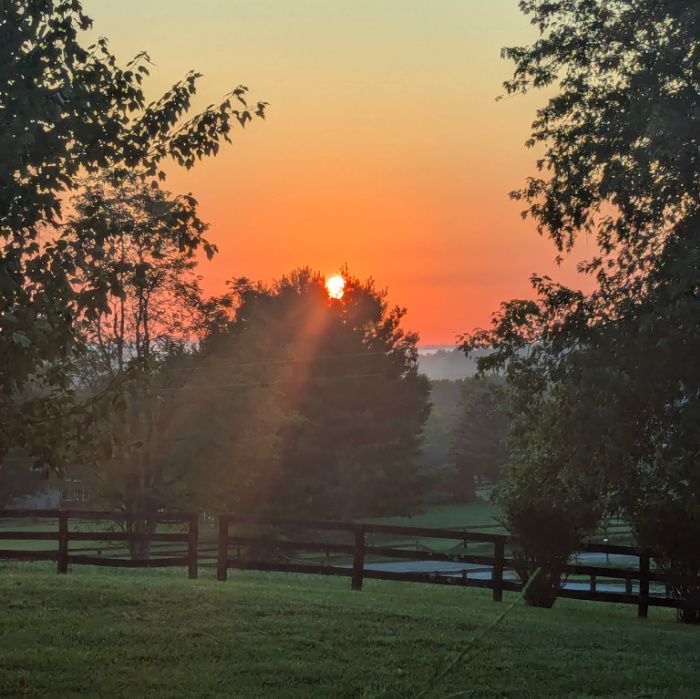
I’m writing this in Bluemont, Virginia, where the trees have begun their Autumn marvel. My Oh My. And I’m staying connected to friends in Florida and Carolina, as they carry the weight of the hurricane’s destruction. In a week I’ll be in Orkney Springs, VA at Shrine Mont. Join me there for our Autumn Fall Camp.
Quote for our week…
They knew about the possibility of this new heart… yet I feel I haven’t even scratched the surface of such a heart in myself. Why not? If not now, when? What’s stopping me? What absurd little gods on pedestals am I feeding and worshiping? What voice in the night haven’t I listened to, and what will I have to leave behind—and what might I find—if I set off into such terrifying freedom with only that voice for company. Gail Godwin