Yes, to compassion

My heart really hurts today. Just the thought of parents searching for missing children amid mangled trees, overturned cars, and muck-filled debris.
A devastated central Texas landscape from the terror and torrent of a flood. And the loss of lives—including too many young children—is real. Everything, and everyone in its way, is changed.
God of compassion, surround the Hill Country with your mercy. Give us strength to mourn and help and heal.
I wish life wasn’t so hard. But storms can remind us that we are on this journey together. And we need stories. Stories to remind us that we are here. Now. And there are choices to be made. The invitation to say, “Yes”, to compassion, hands to hold, people to care for, hearts to hug, spirits to mend and wounds to heal.
And say, “No”, to cruelty, and intolerance, and dismissal.
So. It’s story time. Pull up a chair.
“Every Christmas I used to go home to west Tennessee,” Fred Craddock tells the story in “Craddock Stories”.
“An old high school chum of mine, I called him Buck, had a restaurant in town, every year it was the same. I’d go to the restaurant, ‘Merry Christmas Buck,’ I’d say, and he would give me a piece of pie and a cup of coffee for free. Every year it was the same.
I went in, ‘Merry Christmas, Buck.’
But this year he said, ‘Let’s go somewhere for coffee.’
‘What’s the matter? Isn’t this a restaurant?’
‘He said, ‘Sometimes I don’t know. Sometimes I wonder. Let’s go.’
So we went for coffee. We sat there and pretty soon he said, ‘Did you see the curtain?’
I said, ‘Buck, I saw the curtain. I always see the curtain.'”
Now what he meant by curtain was this: they have a number of buildings in that little town that are called shotgun buildings (we saw them in New Orleans). They’re long buildings with two entrances, front and back. One is off the street, one is off the alley. In Buck’s restaurant and other restaurants in town, the entrances were separated by a curtain, with a kitchen in the middle. If you were white, you came in off the street. If you were black, you came in off the alley.
“He said again, ‘Did you see the curtain? The curtain has to come down.’
‘Good, bring it down.’
He said, ‘That’s easy for you to say. Come into town once a year and tell me how to run my business.’
I said, ‘Okay, then leave it up.’
He said, ‘I can’t leave it up.’
‘Well then, take it down.’
‘I can’t take it down.’ After while he said, ‘If I take that curtain down, I lose a lot of my customers. If I leave the curtain up, I lose my soul.'”
I don’t know how you do a moment of silence on paper. But I do know that a moment of silence is called for after this story. So, we need to sit with it, just for a spell.
And then ask, in what way does this story invite me to (borrowing from John O’Donohue) “live this day compassionate of heart, clear in word, gracious in awareness, courageous in thought, generous in love?” Even if it may be uncomfortable.
This story has been on my heart for some months now. Inviting me to make redemptive choices. But how can I do justice to a story that lays bare a wound in our history that has still not been completely healed? Now, in a world where we feel more disconnected, and tribalized, than ever.
But that’s what makes for great stories. Great stories don’t make things tidy.
Great stories tend to make those who are comfortable, uncomfortable.
And they comfort those who have known both sorrow and heartache.
Great stories engage us—because they challenge the presuppositions and prejudgments we carry, about ourselves and the world in which we live—and (are you ready?) invite us to personal and honest responsibility.
At the heart of Craddock’s story, a man is torn. A decision faces him (most likely, his decision had already been made, it’s just that it takes a while for many of our decisions to find the light of our daily life). But this is true: We all know what it is like to be torn.
And this is our invitation (and our question to unpack) today: where is the reservoir that allows us to make life-giving, compassionate and redemptive choices? (We so easily forgot how little these gestures need to be to make a big difference.)
This I know: Our world is full of curtains and walls. Assuming somehow, walls make us safer. So, we curtain people in, and we curtain people out, both literally and spiritually. Regardless of our “intent”, it leads to grief, fear, division, and too often, violence.
So. I take this story to heart. And after re-reading it, I began making a list of the many reasons for curtains in my own life. Places I choose to close my eyes. Lord only knows whom I’m trying to please. Or what I’m afraid of.
But here’s the deal: I do know that when I am torn, I live anxious, and restless, and exhausted. Which means I do my darndest to keep that curtain up, even though I can’t explain why.
Yes, this is story about moral responsibility. But it’s also about the ways that we preclude or prohibit ourselves from living soul-full. Human. Alive. Responsible and redemptive.
Because curtains or walls cannot serve the purpose of Grace, or healing, or compassion, or the soul.
As long as there are curtains, I cannot receive.
As long as there are curtains, I cannot give.
As long as there are curtains, we cannot connect.
As long as there are curtains, I cannot be a place of sanctuary and grace and inclusion and sufficiency and healing.
I wish it were all easier. I can think of areas in my life where I need to take the curtain down—the curtain of suspicion, or anger, or public opinion, or fear, or old hurts and grudges unforgiven, or prejudice, or an unwillingness to trust, or simply the energy required pretending to be someone that I am not. So, in the end, the curtain gets in the way of letting our light shine, of seeing those around us with compassion, of loving our neighbor—whoever they may be.
At some point we have to decide how conscious we want to be, how much truth we can take. Because there will be a price to pay living this open or truthful or alive.
Curtains say, “You are not welcome here.”
No curtains say, “You are welcome here.”
We all know what it means to not be welcomed. And still, it is easy to find ways to justify the boxes we create to keep people out. You are a bad person, not one of us, you embarrass us and God.
And we know what it means to be welcomed. And embraced. And from that place, we find that we can co-exist in ways to honor dignity, in ways that are not detrimental to one another.
Taking the curtain down is not about impressing anyone. And yes, it is bigger than that. It is about choosing what our heart calls us toward. I cannot tell you what will happen. But I can tell you that if we choose to follow our heart—to our connection at a larger table, to welcome—we will create the space to remember that love is what we are born with. Fear is what we learn.
Quote for our week… My continuing passion is to part a curtain, that invisible shadow that falls between people–the veil of indifference to each other’s presence, each other’s wonder, each other’s human plight. Eudora Welty
Notes… Curtain story from Craddock Stories, Fred Craddock, and some insights on the curtain story from Rev. Eugene N. Nelson, Jr., The Community Church of Sebastopol
BULLETIN BOARD
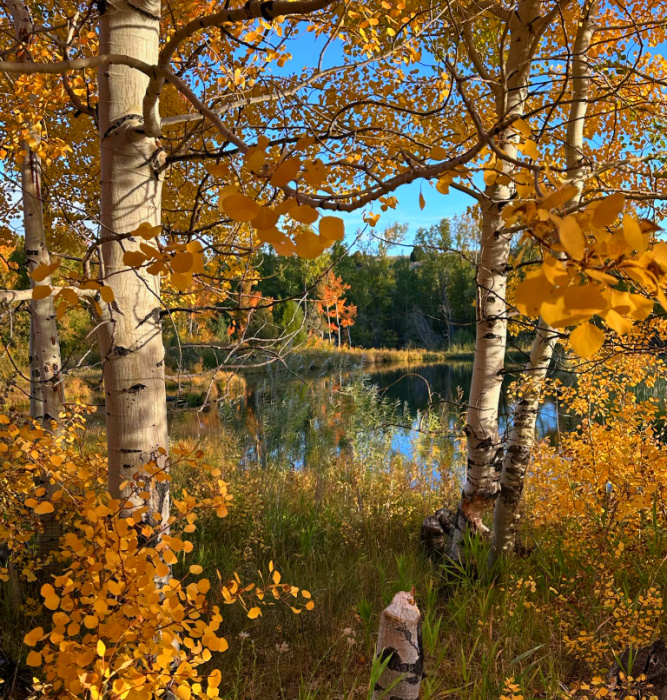
Today’s Photo Credit: “Greetings, Terry, Mick and I just returned from Duck, NC and a week with all the family. It was a good place to gather for beauty, fun and laughter, and celebrate being a family for 55 years. Wishing you the best and always appreciating your Sabbath Moment. Blessings,” Joanie Owens… Thank you Joanie… And thank you to all, I love your photos… please, keep sending them… send to terryhershey.com
Yes, your gift makes a difference… Donation = Love…
Help make Sabbath Moment possible. I write SM because I want to live with a soft heart; to create a place for sanctuary, empathy, inclusion, compassion and kindness… a space where we are refueled to make a difference. SM remains free.
(Address by check: PO Box 65336, Port Ludlow, WA 98365)
Sabbath Moment Audio — Love is the way
Join us every Wednesday… Audio Sabbath Moment
Letters that do my heart good…
–Terry, So true with such a dark world, love is the way! Thank you for the reminder. May God bless you and surround you with love. Joe
–Terry, thank you once again for all you share with the world–poetry, music, and words of wisdom and peace. I will be pondering today’s offering all through the coming week. Bless you, and may grace find you in unexpected ways. Sheilah
–Thank you for all your Sabbath Moments! Today’s spoke to me because the garden feeds my soul and sometimes my tummy. Bless you! Happy July 4th. Cid
–Terry, It made my heart glad to hear of your memorial garden. It brought all the memories back of the joy of gardening: the wonderful aroma of the soil, the tucking in of all the new plants, and all the wonders that one may uncover in the soil. Thanks for being true to yourself and for planting hope and joy in all of us. Have a blessed 4th! Tom
–My Friend Terry, resonated to me, ‘marinate in grace’. Those words have been a part of my daily reads since. Grace and Hope, ‘as long as there is blood running thru our veins’! I am Blessed to have you in my world. Grateful. Please take care, hugs to you Both, Pat
–Terry wow this is packed solid. A month’s worth of reflections in this one! Where do I begin? “Grace is the glue for the Sanctuary that mends are spirit and soul” or is it “Grace is the soil for seeds of Joy”? So much gratitude for the Grace you bestow on us daily. You make us “smile real big”. Deb
–I hope you enjoyed writing about and describing that ordinary, beautiful morning as much as I enjoyed reading it. I have my own equivalent here and it has the same effect upon me–restoring me to sanity and gifting me with peace–grace, indeed. Thanks, Terry, keep “spilling the light.” Kathleen