Daily Dose (March 3 – 6)

TUESDAY MARCH 3 — I read an NPR story about how Stephanie Disney (audiologist at the Commission for Children with Special Health Care Needs) met her (then 2-and-a-half-year-old) daughter, Rudy.
Disney recalls, “my heart recognized her immediately.”
In the story, Disney says, “I am the whitest of white women, and my daughter is some indefinable combination of all that is beautiful from at least three races: curly dark hair, petite features, freckles, a golden tan skin tone, one blue eye and one brown. If her race had only one name, it would be perfection. I understand that everyone wants love and acceptance. And these are such rare gifts, that when people see them freely demonstrated, they are compelled to seek the source. Recently, Rudy surprised me when a white-haired lady, standing right beside us, asked if I was her mother.
Rudy threw the lady a disbelieving glance and said, ‘Well, she helps me with multiplication, fixes my hair, kisses me and we both have freckles on our noses; who else could she be?'”
From a soft heart, compassion wins.
For starters, when we see with our heart we don’t give in to fear, or judgment, or alarm, or dismissal.
We do live in a world where it is tempting (and easy) to put people in a “box”—with labels to match.
One thing Jesus did with his parables, and “encounters” with the people around him, was to invite honesty about our paradigm. What kind of lens (glasses, or paradigm) do we use, to see the world, and the people in it?
And in his parables, he always invites a paradigm shift.
Let us choose empathy over judgment.
Let us choose understanding over dismissal.
Let us choose compassion over retaliation.
Let us choose inclusion over marginalization.
When I see only the label, or the box, it is easy to judge, or dismiss, or devalue.
With great irony, this itch to judge comes to life from our own fear of vulnerability.
The vulnerability alive and well in a soft heart. And this we know my friends, having a soft heart in a cruel world is courageous.
I love crayons. As a young boy, I always hoped that a Crayola box of 64 would be under the Christmas tree. Maybe you can relate?
Here’s the deal: We are like crayons. I may not be your favorite color, and you may not favor the hues of others. But one day, we’ll find that we need each other to complete the masterpiece. For it is in the blending of differences and distinctiveness that the most beautiful pictures are painted. And together, we create a story far greater than any single color could tell.
In Sabbath Moment yesterday, I used the quote
“Be soft. Do not let the world make you hard.
Do not let pain make you hate.
Do not let the bitterness steal your sweetness.
Take pride that even though the rest of the world may disagree,
you still believe it to be a beautiful place.”
One of my favorites, and I attributed it to Kurt Vonnegut. It was actually written by Iain Thomas (I Wrote This For You). Thank you, Iain.
WEDNESDAY MARCH 4 — We are like crayons. I may not be your favorite color, and you may not favor the hues of others. But one day, we’ll find that we need each other to complete the masterpiece. For it is in the blending of differences and distinctiveness that the most beautiful pictures are painted. And together, we create a story far greater than any single color could tell.
And I smiled big when I received this email from SM reader, Cindy, “And, remember broken crayons still color.”
Yes, and Amen.
Over the years in Sabbath Moment, we’ve talked about brokenness. And woundedness. And in both cases, how we too easily forget that neither brokenness nor woundedness diminishes our capacity to live whole-hearted. Or to spill light, and magnify color in a world where every small gift of kindness and encouragement and compassion makes this a better world.
Real life—real world trauma—can take a palpable toll. Recently we talked about feeling quanked (emotionally fatigued). That is real. But the fatigue is exacerbated when we believe that brokenness (or woundedness) is a weakness. Or a limitation and inadequacy, affecting our capacity to choose.
Let’s just say that it is no surprise when we prefer to shut down.
When Harold Kushner’s son was tragically killed, a friend, meaning to console Kushner, told him that he could rise above the pain, and move past it. Kushner writes, “But I believed that it was supposed to hurt. In the same way that dead cells, our hair and fingernails, feel no pain when they are cut but living cells bleed and hurt, so I believe that spiritually dead souls can be cut into, separated from other souls, and not feel pain. But living, sensitive souls are easily hurt. I don’t like being hurt… but when I protect myself against the danger of loss by teaching myself not to care, not let anyone get too close to me, I lose part of my soul. If we believe that in order for life to be good, we have to avoid pain, the danger is that we will become so good at not feeling pain that we will learn not to feel anything not joy, not love, not hope, not awe. We will be emotionally anesthetized.”
(When All You’ve Ever Wanted Isn’t Enough)
When society feels cruel, it is easy to be hurt or led astray. To remain tender after loss or tragedy or betrayal, is to choose life when renunciation beckons.
So. Let us choose to stay connected to our heart.
And let us embrace the truth that being fully seen, even at the risk of pain, is the only way to truly live.
Messiness, chaos, heartbreak, and vulnerability are not obstacles, they are the ingredients—transformed by hope—that gratefully become the “Crayola color” of human existence.
Let us not forget: Choosing to live from a soft heart in a cruel world is courageous.
Choosing softness is choosing hope, over cynicism.
Choosing connection, over isolation.
Choosing being fully alive, over merely surviving.
THURSDAY MARCH 5 — Choosing to live from a soft heart in a cruel world, is courageous.
Choosing softness is choosing hope, over cynicism.
Choosing connection, over isolation.
Choosing being fully alive, over merely surviving.
I had a moment today where I felt my sore heart close. And I needed a story with an invitation to embrace hope.
“A rabbi once told a story that people have carried through centuries of upheaval.
Someone asked him a frightening question.
‘What should a person do if they knew the world would end tomorrow?’
It was not a philosophical question. It was the kind of question people ask when history begins to feel unstable. When wars spread. When leaders make decisions that place millions of lives at risk. When the future no longer feels dependable.
The rabbi did not dismiss the fear. He did not say the person was exaggerating. He did not rush to reassure them that everything would be fine.
He simply answered.
‘Then today,’ he said, ‘you should plant a tree.’
At first the answer sounds strange. If the world ends tomorrow, why plant anything at all? Why place something fragile into the soil if there may be no future to receive it?
But the rabbi understood something about the human soul.
When people begin to believe the future is lost, they stop tending life. They stop caring for the earth. They stop caring for one another. Fear slowly shrinks the boundaries of their humanity.
The rabbi refused to let fear have that power.
Plant a tree.
Plant it even if the news grows darker.
Plant it even if leaders act recklessly.
Plant it even if the future feels uncertain.
Plant it because tending life is who you are.
Many people I speak with right now are carrying grief. You can feel it in conversations. You can feel it in the quiet pauses when people try to describe what this moment feels like. War does that. Even when the bombs fall far away, our spirits know something sacred has been broken.
Grief is not weakness. Grief is what love feels like when life is threatened.
But grief can slip into despair. St. Thomas Aquinas taught that despair was the most dangerous of all human conditions. Despair tells us a dangerous lie: that nothing we do matters anymore.
The rabbi knew better.
Plant a tree.
Plant a tree because compassion still matters.
Plant a tree because truth still matters.
Plant a tree because the future—even an uncertain future—is still worthy of care.
This is the same wisdom the prophet Jeremiah gave to a people who believed their world had collapsed. Jerusalem had fallen. Their leaders had failed them. They were living in exile under an empire they did not trust.
And the prophet told them something surprising.
Build houses.
Plant gardens.
Seek the welfare of the place where you live.
In other words: keep tending life.
Good religion has always known this truth. We cannot control the great movements of history. None of us can stop the machinery of war alone. But we are not powerless.
We can decide who we will be while history unfolds around us.
We can keep loving our neighbors.
We can keep telling the truth.
We can keep protecting the vulnerable.
We can keep tending the earth.
We can keep planting trees.
We don’t know what tomorrow will bring. But we know who we are called to be today.
We are in this together.”
Thank you, Rev. Cameron Trimble (Piloting Faith).
You did my sore heart good today.
And I took the Rabbi’s advice. I planted three trees. One Maple. And two Western Red Cedars. All started from cuttings over a year ago, now about two feet tall, and in the ground ready to spread their roots.
FRIDAY MARCH 6 — Yesterday we were invited to plant a tree.
Plant a tree, because compassion still matters.
Plant a tree, because truth still matters.
Plant a tree, because the future—even an uncertain future—is still worthy of care.
And I received this email from Stephen. “Terry, Thank you! I needed the reminder of what I do, and to hear it from somebody. So, I plant trees, by planting seeds in people’s hearts. Seeds of Hope, seeds of life, seeds of compassion, seeds of forgiveness. Especially seeds that ‘they are enough’, and they don’t have to earn love.”
Yes. And Amen. Planting seeds that tell us, “We still care.” We are still invested. Tending life—and the welfare of the place where you live—matters.
I realize the healing power the garden has in my own life. It allowed me to reconnect with my heart.
I slowed down. I learned to be present—to embrace the Sacrament of the Present Moment.
In my book Soul Gardening, I try to explain to people about the dramatic change in my life. Emphasis upon my life. I had no intention of creating a paradigm or a new seminar on life reconstruction. Truth is, one day, quite by happenstance, I planted a flower.
As the flower grew, I began to feel something come alive in my own skin. I would go out at weird hours of the day and night, just to fuss over the flower. I dug in the dirt to the let flower breathe. I planted other flowers to give the flower friends. And I surprised myself by crying when one of the flowers died for no apparent reason.
I caught myself humming odd melodies from my childhood, blushing, wondering if anyone heard me. As the flowers continued to grow, I took a chair out and sat in the garden just to keep them company. I would tell the flowers funny stories and laugh out loud into the evening sky. A strange grin spread across my face as I realized what was happening. I felt at home.
The months went on. I planted more flowers. I planted vegetables and trees. I brought guests to my garden just to see them smile.
I watched my garden grow, I fussed and frittered. I dug and danced. I came face to face with a part of myself that had been missing. And I liked what I saw.
With the gift of grace, there is no check list, save allowing the healing places to work their magic. If I’m only focused only on the payoff (destination), I miss the gifts on the journey. Yes, I miss the “gift of enough”.
The garden put me in a frame of mind where I could hear and see and feel again, as if some part of me that had ossified came back to life. I cannot say with certainty that I heard God’s voice (for I’m not sure what that voice would sound like, were I to hear it), but I suspect that God was the one who planted the seed to begin with, and was watching over me while that seed took root. For in the garden I found, in the words of Quaker teacher Thomas Kelly in A Testament of Devotion, the “amazing inner sanctuary of the soul, a holy place, a Divine Center, a speaking Voice.”
Sitting in the garden, the Shasta Daisy would care less about my pedigree, which in turn serves as the perfect metaphor for God’s grace—an altogether difficult lesson to swallow in a world where all of our encounters seem like contests, where only the “winner” is granted the right to move on.
My friends: Let us not forget: Choosing to live from a soft heart in a cruel world is courageous.
Choosing softness is choosing hope, over cynicism.
Choosing connection, over isolation.
Choosing being fully alive, over merely surviving.
And for those who wish to watch my presentation, “Look for the helpers,” you can find it here on YouTube.
Prayer (poem) for our week…
May I be a guard for those who need protection
A guide for those on the path
A boat, a raft, a bridge for those who wish to cross the flood
May I be a lamp in the darkness
A resting place for the weary
A healing medicine for all who are sick
A vase of plenty, a tree of miracles
And for the boundless multitudes of living beings
May I bring sustenance and awakening
Enduring like the earth and sky
until all beings are freed from sorrow
And all are awakened.
Bodhisattva Prayer for Humanity
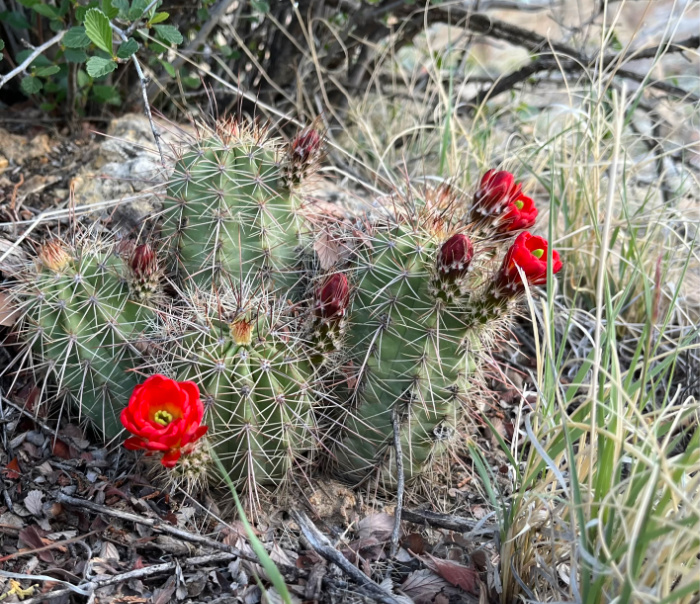
Photo… It is Crocus time here in our gardens in the Pacific Northwest. My Oh My… And thank you for your photos, please send them to tdh@terryhershey.com
Donation = Love… Your gifts make Sabbath Moment possible.
I am so very grateful.
Please Share Sabbath Moment with others.
And find it on Facebook @RevTerryHershey