Daily Dose (September 15 – 18)

TUESDAY SEPTEMBER 15 —
“I keep asking myself, what is mine to do, now. Every day, every moment: what’s the most creative, loving, courageous, and authentic way that I can show up now?” Thank you, Miki Kashtan.
We told the story of Lorraine Hunt Lieberson, who began her career as an accomplished viola player. While on tour in Europe (in the late 1980s), her viola was stolen. She could have replaced it. As would be imagined, the theft threw her into a state of feeling lost, and uncertain. And Lorraine stopped playing.
But here’s the deal: Life is not only about what has been lost. Life is about the music that resides, and endures. It is the music that gives, and empowers, hope. Which means that we have a choice, to say how the story ends. Because when I believe that I am at the mercy of the story—or the script, or “incidents”—I demand to make sense of it all. Or rail against it. Or play a victim.
As if I’m helpless. “I’m sorry, I’d love to ‘play music’—I’d love to care, or make a choice, or make a difference, or take a risk—but I lost ‘my viola.’”
So. Where do we go—what choices do we make—in a world fractured, or frightened, or empty?
In what ways can I say, “No”, to indifference?
On the anniversary of 9-11, I am so grateful for the stories. Or ordinary people stepping up, stepping in, making a difference.
And this one comes to mind.
I can tell you this; showing up—and saying “No” to indifference—is a choice that would have been celebrated by Fr. Mychal Judge. When the towers were hit, FDNY Chaplain Father Mychal Judge, chose to suit up, and go where he was needed. He went into the upheaval.
To save a life, it cost him his life.
Knowing his sacrifice, it is worth reading these excerpts from his Last Homily, delivered at a Mass for Firefighters on Sept. 10, 2001. “You do what God has called you to do. You get on that rig, you go out and do the job. No matter how big the call, no matter how small, you have no idea of what God is calling you to do, but God needs you. He needs me. He needs all of us. God needs us to keep supporting each other, to be kind to each other, to love each other… We love this job, we all do. What a blessing it is! It’s a difficult, difficult job, but God calls you to do it, and indeed, He gives you a love for it so that a difficult job will be well done… Turn to God each day—put your faith, your trust, your hope, and your life in His hands. He’ll take care of you, and you’ll have a good life. And this firehouse will be a great blessing to this neighborhood and to this city. Amen.” Thank you, Fr. Judge.
“September 11th is worth remembering. Not only because of the heartbreak, but because of what it revealed about who we are. People rushed in. Ordinary people did extraordinary things. A nation that had been going about its ordinary days stopped and chose each other.
That memory lives in our bodies. It lives in our brains. It lives in the stories we share with those who weren’t even alive on that day. And on this day twenty-five years later, I find myself wondering whether we are still those people.
Because something has shifted in the last twenty-five years. We have seen it play out in ways large and small. When something happens—a tragedy, a controversy, a moment of public failure—too many of us no longer rush in to help. Instead, we pile on. We cancel. We judge from a distance. We reach for our phones not to help, but to weigh in. We perform our outrage and then scroll to the next thing—never having left our couch, never having risked anything, never having offered anything but our opinion. We bounce from one screen or chore to the next, without ever taking a moment to pause and process what has happened.” Thank you, Maria Shriver.
Parker Palmer talks about retaining a sense of meaning in our later final years. “I no longer ask, what do I want to let go of, and what do I want to hang on to? Instead, I ask, what do I want to let go of, and what do I want to give myself to. The desire to hang on comes from a sense of scarcity and fear. The desire to give myself comes from a sense of abundance and generosity. Those are the kinds of truths I want to wither into.” Amen.
And in case you missed the music video in Sabbath Moment, my friend Larry Murante’s tribute to Nelson Mandela about keeping our hope alive.
WEDNESDAY SEPTEMBER 16 —
“I keep asking myself, what is mine to do, now. Every day, every moment: what’s the most creative, loving, courageous, and authentic way that I can show up now?” Thank you, Miki Kashtan.
This week, we’re telling—and embracing—stories about what it means to say, “No”, to indifference.
On the morning of November 14, 1960, a little girl named Ruby Bridges got dressed and left for school. Ruby became the first Black child to desegregate the all-white William Frantz Elementary School in New Orleans. Ruby walked into an all-white elementary school in New Orleans, escorted by federal marshals, while angry and callous mobs shouted threats.
Ruby walked anyway.
In the midst of one of America’s most tumultuous periods, a young girl stood tall as a beacon of hope and courage in the fight for racial equality. Here’s the deal: Ruby’s story is a powerful reminder that even the smallest among us, can make a big impact, one step at time.
In his book, “A Pretty Good Person”, Lewis Smedes wrote: “A federal judge had ordered New Orleans to open its public school to African-American children. The white parents decided that, if they had to let black children in, they would keep their children out. They let it be known that any black children who came to school would be in for trouble. So the black children stayed home, too.
Except Ruby Bridges. Her parents sent her to school all by herself, six years old.
Every morning she walked alone through a heckling crowd to an empty school. White people lined up on both sides of the way and shook their fists at her. They threatened to do terrible things to her if she kept coming to their school. But every morning at ten minutes to eight Ruby walked, head up, eyes ahead, straight through the mob.
Two U.S. marshals walked ahead of her and two walked behind her. Then she spent the day alone with her teachers inside that big, silent school building.
Harvard professor Robert Coles was curious about what went into the making of courageous children like Ruby Bridges. He talked to Ruby’s mother and reported what she said. ‘There’s a lot of people who talk about doing good, and a lot of people who argue about what’s good and what’s not good,’ but there are other folks who ‘just put their lives on the line for what’s right.’”
And I say, “Amen”.
I am also telling this story today, because September 8th was Ruby’s 72nd birthday. Happy Birthday Ruby, and thank you, for the light you continue to spill as a peacemaker and healer.
Whether we recognize it or not, all of us are born with moral courage. True, it does get buried in stuff, and noise, and fear. But it is there. It is the willingness to stand up for what is right, even when it is uncomfortable, unpopular, or risky. It is speaking out against injustice, challenging unethical behavior, and refusing to compromise our values—even when silence feels safer.
“The refusal to take sides on great moral issues is itself a decision. It is a silent acquiescence to evil. The Tragedy of our time is that those who still believe in honesty lack fire and conviction, while those who believe in dishonesty are full of passionate conviction.” Fr. Fulton J. Sheen
THURSDAY SEPTEMBER 17 —
“I keep asking myself, what is mine to do, now. Every day, every moment: what’s the most creative, loving, courageous, and authentic way that I can show up now?” Thank you, Miki Kashtan.
This week, we’re telling—and embracing—stories about what it means to say, “No”, to indifference.
Gratefully, throughout history, people, very ordinary people have taken exception to scripts (and stories) of hopelessness and exclusion. Exception to stories of hate. And violence.
Very ordinary people have taken on “the impossible” time and time again.
And the good news? It comes from who we are.
It spills from the inside out.
Because here’s the deal: This capacity—for love, compassion, kindness, truth, forgiveness, justice, restoration—is within. Every one of us. These are the armaments of the Spirit.
Nelson Mandela reminded us that “No one is born hating another person… People must learn to hate, and if they can learn to hate, they can be taught to love, for love comes more naturally to the human heart than its opposite.”
Let us pause, and digest that: We are hardwired to not hurt each other. Which means that if we hate, we have to dehumanize one another. (Now we’re back to the power of choice.)
And yes, we know that “it is wiser to light a candle than to curse the darkness.”
But let’s be honest. Sometimes life is dark and not fun. Adversity is real. Life can be cruel. (People can be crueler.) Suffering happens. Suffering hurts. We reach a tipping point. And finding a candle is not always easy, let alone the motivation to light it.
So, yes, we wish the world were different. We wish the conversation wasn’t so toxic.
“I wish it need not have happened in my time,” said Frodo.
“So do I,” said Gandalf, “and so do all who live to see such times. But that is not for them to decide. All we have to decide is what to do with the time that is given us.” (The Lord of the Rings)
After Nelson Mandela was released from prison he ran for office and was elected President of South Africa in 1994. His message? Forgiveness.
I gotta admit, that’s not a common political platform these days.
And then cynicism abounded. Many assuming that his declaration was lip service. And yet, something within his core allowed him to rise above situations, and surprise others with strength. He began with his staff, keeping both Afrikaners and Black. There was understandable tension.
In a scene from the movie “Invictus”, Nelson Mandela models the behavior, telling his guard (who was certain this new integrated South Africa would not work):
“The rainbow nation starts here
recognition starts here
forgiveness starts here too
forgiveness liberates the souls
it removes fear
that is why it is such a powerful weapon
so please, try.”
“Keeps my hope alive. Nelson took a bite out of apartheid.” (Thank you, Larry Murante.)
And today, we can take a bite out of apathy.
We can take a bite out of intolerance. Out of small-mindedness. Out of unkindness. Out of cruelty. Out of shame. And out of fear.
And we raise a glass to Annie Dillard, who died yesterday at the age of 81. I don’t know if I read all of her books, but most of them. Grateful for Holy the Firm and Pilgrim at Tinker Creek both did my heart good.
“How we spend our days is, of course, how we spend our lives.” Thank you, Annie Dillard.
FRIDAY SEPTEMBER 18 —
On a Saturday morning in 2013, during a Pilgrimage, which included the Selma walk with John Lewis, I stood in the kitchen of the Dexter Avenue Baptist Church Parsonage, the home to the Rev. Dr. Martin Luther King Jr. and his family from 1954 to 1960. By the time the Montgomery bus strike was achieving both success and national attention, Dr. King began receiving telephone death threats (as many as 40 a day).
“One night very late around midnight—and you can have some strange experiences at midnight—the telephone rang.” Dr. King relates the story in a later sermon. “On the other end was an ugly voice.”
“For some reason, it got to me. I was weak. Sometimes, I feel discouraged… You can’t call on Daddy anymore. You could only call on the Something your Daddy told you about, that Power that can make a way out of no way.”
And at that kitchen table, he prayed. “Lord, I’m down here trying to do what’s right… But I must confess… I’m losing my courage.”
King explained what happened next: “I could hear an inner voice saying to me, ‘Martin Luther, stand up for truth. Stand up for justice. Stand up for righteousness.’”
Maybe that’s what clicked. When I see acts of courage, I see heroism, and I don’t see myself.
Or I see how far I have to go.
Or I see how far short I have fallen.
But I do understand tired.
And I do understand discouraged.
And I do understand the end of my resources.
And I do understand that it is not easy to be gentle with yourself.
It is not easy to embrace and be embraced by grace and self-care.
But care of any kind begins with self-care, honoring moments of wellbeing and healing.
And this we know: from that place, spills light.
Light that is healing for those who have been left out.
Light that is soothing for those who are feeling alone and afraid.
Light that is restorative for those needing shelter in moments of sanctuary and grace.
“I keep asking myself, what is mine to do, now. Every day, every moment: what’s the most creative, loving, courageous, and authentic way that I can show up now?” Thank you, Miki Kashtan.
This week, we’re telling—and embracing—stories about what it means to say, “No”, to indifference.
My friend; this week…
Show up—be a voice where you live.
Be the giver and dispenser of blessings.
Know that deep down there is a light that cannot be extinguished by hatred or judgment or cynicism or fear.
Prayer (poem) for our week…
Lord of life and love.
We pray for the world
in all its brokenness.
May peace overcome war,
may love overcome hate,
may generosity overcome greed,
may gentleness overcome pride,
that the earth may be filled
with your glory, and peace.
Amen
Words by Jenny Child
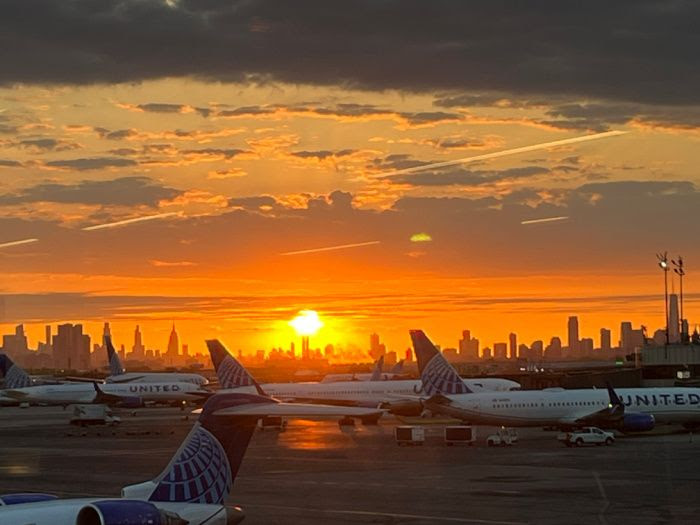
Photo… Another wonderful photo in the “folder”, and one that I “misplaced” who sent it. So, we’ll go with thank you dear friend for the photo that makes us smile big… We are grateful… And thank you all for your photos, please send them to tdh@terryhershey.com
Donation = Love… Your gifts make Sabbath Moment possible.
I am so very grateful.
Please Share Sabbath Moment with others.
And find it on our website terryhershey.com