Daily Dose (August 25 – 28)

TUESDAY AUGUST 25 —
I can tell you that it is easy to write—and preach—a homily on kindness.
Practicing kindness, well, that is another thing altogether.
This I know with deep gratitude: One of the gifts we can give one another is sharing stories about ordinary people, offering, sharing, and spilling the rainbow of kindness—and tenderness, and mercy, and grace. Stories that plant a seed in our hearts.
One of my favorite stories, is a song version written by Kris Kristofferson, “Here Comes that Rainbow Again”. Pull up a chair and join me…
The scene was a small roadside café
The waitress was sweeping the floor
Two truck drivers drinking their coffee
And two Okie kids by the door
“How much are them candies?” They asked her
“How much have you got?” She replied
“We’ve only a penny between us”
“Them’s two for a penny,” She lied.
And the daylight grew heavy with thunder
With the smell of rain on the wind
Ain’t it just like a human
Here comes that rainbow again
One truck driver called to the waitress
After the kids went outside
“Them candies ain’t two for a penny”
“So what’s it to you,” she replied
In silence they finished their coffee
And got up and nodded goodbye
She called, “Hey, you left too much money”
“So what’s it to you,” they replied
And the daylight grew heavy with thunder
With the smell of rain on the wind
Ain’t it just like a human
Here comes that rainbow again
Why “get in”? Because we’re in this together, and I have something to give. And trust me, it makes a difference. “This little light of mine, I’m gonna let it shine. Hide it under a bushel, No.”
And thank you, Kris Kristofferson, who wrote this story-song—which was inspired by the lunch counter scene in Chapter 15 of John Steinbeck’s Dust Bowl novel “Grapes of Wrath”.
And this week, please take a moment to say “thank you” to those in your life and world, who have made choices to spill the rainbow of kindness—in little gestures and smalls ways.
WEDNESDAY AUGUST 26 —
I love movies with stories that speak to the heart.
Have you seen “Just Mercy”? It is the story of young lawyer Bryan Stevenson and his history-making battle for justice.
After graduating from Harvard, Bryan had his pick of lucrative jobs. Instead, he heads to Alabama to defend those wrongly condemned or who were not afforded proper representation, with the support of local advocate Eva Ansley.
One of his first, and most incendiary, cases is that of Walter McMillian, who, in 1987, was sentenced to die for the notorious murder of an 18-year-old girl, despite a preponderance of evidence proving his innocence and the fact that the only testimony against him came from a criminal with a motive to lie.
In the years that follow, Bryan becomes embroiled in a labyrinth of legal and political maneuverings and overt and unabashed racism, as he fights for Walter, and others like him, with the odds-and the system-stacked against them.
There’s a great scene where Bryan says to his worried Mother, “You taught me to fight for the people that need help the most.”
And to John Powell, I am grateful for this: “There’s a South African word called Sawubona, which means, ‘I see you’. The word is also sometimes interpreted as the God in me, sees the God in you. Bridging is seeing the other person. So it doesn’t mean you agree with the person. Doesn’t mean you change your mind, or they change your mind. But you see their humanity, you see their value, and you’re resolutely willing to open up and just listen, empathetic listening, compassionate listening…
One approach is to try to persuade the person to come to your side. Another is to avoid the person. Bridging is neither of those. Bridging is saying, I want to connect with the other person. Bridging is saying, I’m curious. Bridging involves connecting at the heart level, as well as the head level. So it’s really being present with someone.”
Yes. It is better to light a candle.
It is better to build a bridge.
Or as our story on Monday invited us, “Get in”.
Because some stories are too heavy to carry alone.
Let us embrace the gift of Sawubona.
“Here’s to the bridge-builders, the hand-holders, the light-bringers, those extraordinary souls wrapped in ordinary lives who quietly weave threads of humanity into an inhumane world. They are the unsung heroes in a world at war with itself. They are the whisperers of hope that peace is possible. Look for them in this present darkness. Light your candle with their flame. And then go. Build bridges. Hold hands. Bring light to a dark and desperate world. Be the hero you are looking for. Peace is possible. It begins with us.” L.R. Knost
THURSDAY AUGUST 27 —
Our world lost a very bright light yesterday. Rest in Peace, Dolly Parton.
In a world where differences make walls and enemies, she had a unique ability to bring Americans together for good causes.
In a world where having “more” is a measure of power, her lifelong philanthropy was fueled by her reputation for kindness and generosity.
Generosity, heart, and light. An audacious, unexpected life.
Today, I chose my topic for the Los Angeles Religious Education Congress (April, 2027). Workshop title: “Build bridges. Hold hands. Spill light.”
We know what it is like to feel lost. Or untethered. And it is easy to focus only on the lost part. Forgetting that we are on this journey together. I am so grateful for those in my life who have said, “Take my hand, we’ll find our way together.” It’s the little gifts my friends. To hug the hurt. Kiss the broken. Bandage the wounded. Befriend the lost. Stand up for the humiliated. Little gifts of compassion leave people better than we find them.
And I’ll give a shoutout to Dolly. Our world needs people who spill light.
Two stories come to mind.
“Why did you do all this for me?” Wilbur asked.
“I don’t deserve it. I’ve never done anything for you.”
“You have been my friend,” replied Charlotte. “That in itself is a tremendous thing. I wove my webs for you because I liked you. After all, what’s a life, anyway? We’re born, we live a little while, we die. A spider’s life can’t help being something of a mess, with all this trapping and eating flies. By helping you, perhaps I was trying to lift up my life a trifle. Heaven knows anyone’s life can stand a little of that.”
EB White, “Charlotte’s Web”
The other story, is the parable for the lost sheep. “This shepherd had one hundred sheep. And one of them was lost. And the shepherd leaves the ninety-nine sheep to go out and find the lost one. He brings him home.”
Too many know what it means to be disconnected, discounted, diminished, demeaned. Lost.
In the story, the shepherd doesn’t blame the lost one. Or give advice. Or admonish. Because to the shepherd, that sheep is not just a number, but a face, a name, and a story.
The shepherd knew that some stories are too heavy to carry alone. That every one of us at some time in our life will need the loving arms of justice, mercy, and unmerited grace.
And here’s the deal: some days we are the one lost. And some days, we are the hands and feet of the shepherd. Yes… Build bridges. Hold hands. Spill light.
Celebrant: Will you strive for justice and peace among all people, and respect the dignity of every human being?
People: I will, with God’s help. (The baptismal covenant in the Episcopal Church.)
Because some stories are too heavy to carry alone.
And my gratitude to John Pavlovitz, for these final words honoring Dolly.
“In the coming days, there will be countless, well-deserved tributes devoted to her seismic songwriting and singing career, her formidable business acumen, her indefatigable optimism, and her easy, infectious joy.
Dolly will be rightly eulogized for the effortless grace she moved through the world with, for the gentleness she extended to every person in her path, and for the humility she somehow managed to hold onto despite reaching near-sainthood status among fans, admirers, and peers alike.
Her life and career have and will provide an inexhaustible treasure trove of lessons for those of us who remain—and for those on the horizon of history who will not have had the great fortune to live here while she did.
She could have partnered with the legion of malevolent power-holders, motivated only by the insatiable allure of more. She could have exploited the influence she acquired to amass even greater fortune.
Instead, Dolly Parton spent her life giving her wealth away.”
FRIDAY AUGUST 28 —
The Sunday-school teacher asked her 10-year-old students if they would be willing to give one million dollars to missionary work, for children and families in need.
“Yes,” they all screamed in unison.
“Very good. Would you give one thousand dollars?”
“Yes!”
“Good. Would you give one dollar?”
The class responded, “Yes,” except for one young boy, who sat silent.
“Why didn’t you say yes?” the teacher asked.
“Because,” he stammered. “I have a dollar in my pocket.”
Napoleon reminded us, “Nothing is more difficult, and therefore more precious, than to be able to choose.” And because of that, the freedom “to choose” always works better in speeches, than it does in practice.
It’s been our theme this week. We can “believe”, or we can “Get in.”
But here’s the deal: I can relate to the little guy. I get it.
Because this story isn’t about money, but our freedom to choose.
And, once you’ve got “a dollar in your pocket,” there’s a parting of the ways in what we “believe”, and how we live.
Of course, I am still “free” to contribute, give, care for, risk, go out on a limb, let go, to live unshackled. But with my hand over the dollar in my pocket, I am stuck. And we all know the litany here (any of the reasons we find it difficult to remove our hand… any of the reasons that keep us stuck)—shame, need for perfection, fear of disappointment, “should,” need for certainty. Or, what if my dollar is not enough? After all, what will “they” think? (Did it ever occur to you that we’ve never actually met “them,” but they still control our lives? Go figure.)
For me, it boils down to this: For whatever reason, I am afraid to let who I am (and what I have) spill to the world around me.
In conversations these days, in a world feeling upside down, where there are indeed, hands to hold, I am asked, “But what choices do we have? What can I do?”
I can begin here: “I can care. And I can give the dollar I have.”
And the good news? If you take the dollar—our heart, our big-heartedness, our compassion, our impact—from your pocket, you open yourself to change.
Now in touch with my heart, I am available to… give, forgive, risk, fail, try, create, offer, feel, see, embrace wonder.
I am available to build-bridges, cry, laugh, play, grieve, mourn, fall-down, get-up-again, paint, write, and see poetry in the clouds.
I am available to lend a helping hand, hold a hand that needs it, and give in to the vulnerability of trusting another who pushes the wheelbarrow.
“Here’s to the bridge-builders, the hand-holders, the light-bringers, those extraordinary souls wrapped in ordinary lives who quietly weave threads of humanity into an inhumane world. They are the unsung heroes in a world at war with itself. They are the whisperers of hope that peace is possible. Look for them in this present darkness. Light your candle with their flame. And then go. Build bridges. Hold hands. Bring light to a dark and desperate world. Be the hero you are looking for. Peace is possible. It begins with us.” L.R. Knost
Thank you, my friends, for being a part of Sabbath Moment. I am grateful for the community. If you know anyone who would enjoy, and benefit from Sabbath Moment, please invite your friend to join us.
Prayer (poem) for our week…
Gardener God
Forgive us for the times we have kept our seeds in the packet
For the times we’ve been too scared to risk, too selfish to love, too embarrassed to try
Gardener God, have mercy on us
Forgive us for where we have let weeds grow in the soil of our lives
For the times we have forgotten to pray,
for the days when we don’t bother to listen,
for the moments when we neglect the stirring of your spirit
Gardener God, have mercy on us
Forgive us for when we have trampled on the seedlings of others
Through careless words or outright criticism,
through envy or feeling threatened,
through being insensitive or wrapped up in ourselves
Gardener God, have mercy on us
Forgive us for when we think it’s all down to us
When we forget that to grow we need the earth of our community,
The water of other people’s contribution,
The sunshine of your favour,
The nutrients that come through conversation and challenge
Gardener God, have mercy on us
Amen
(Thank you, Jonny Baker)
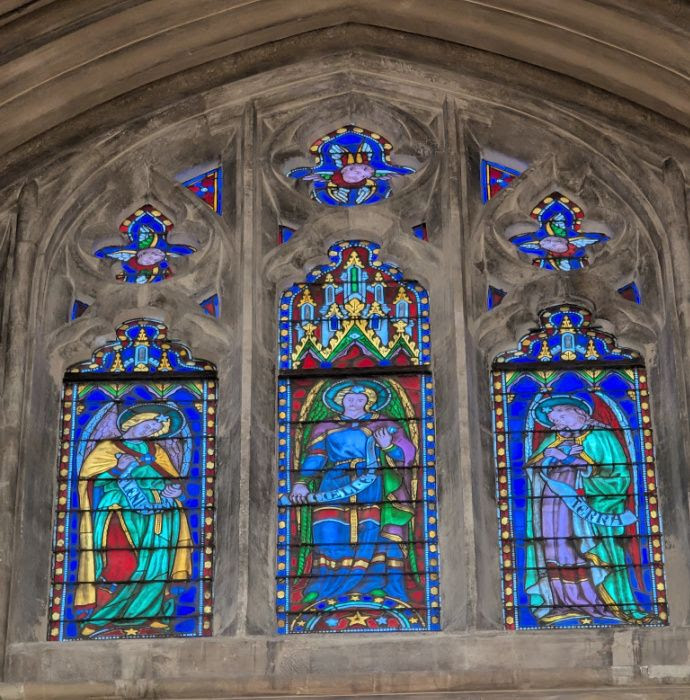
Photo… I love this photo. And it’s in the “stack” of photos that have been sent to me, where I have misplaced, or forgotten, the name of the person who sent it. Let’s call it the “welcome to my age” memory pile… This I do know… I am so very grateful for the photos you send. They make Sabbath Moment… Thank you all for your photos, please send them to tdh@terryhershey.com
Donation = Love… Your gifts make Sabbath Moment possible.
I am so very grateful.
Please Share Sabbath Moment with others.
And find it on our website terryhershey.com